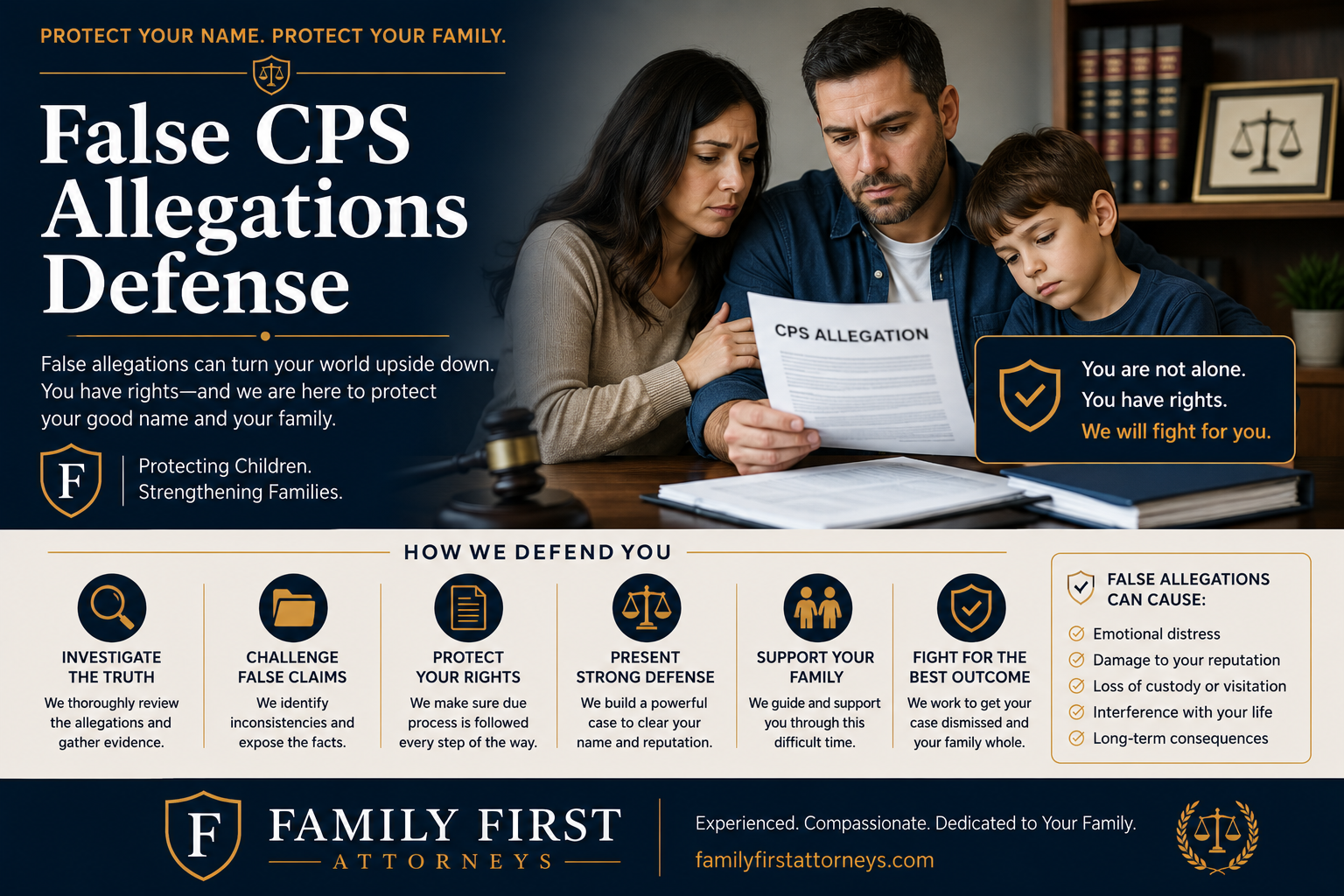
Facing an investigation by Child Protective Services (CPS) can be one of the most frightening experiences for a parent. When you receive a report accusing you of child abuse or neglect, especially if it’s a false CPS report California law allows to be filed, your world can feel like it’s falling apart. You may feel overwhelmed, confused, and unsure of where to turn. The stakes are incredibly high — your parental rights, your children’s safety, and your family’s future are all on the line. Understanding your rights and how to respond effectively is crucial to protecting yourself and your family.
In California, unfounded CPS allegations are not uncommon. These reports can arise from misunderstandings, malicious intent, or even mistakes. Regardless of how the report originated, it’s important to know how to defend against CPS investigations to safeguard your family. This article will guide you through the process, explain your rights, and provide actionable steps to help you respond to a false or malicious CPS report.
What Is a False CPS Report in California?
A false CPS report is an allegation of child abuse or neglect made to authorities that is untrue or unsupported by evidence. In California, anyone can file a report with CPS if they suspect child abuse or neglect. These reports are taken seriously under Welfare & Institutions Code Section 300, which defines the grounds for intervention when a child is at risk.
However, not every report is accurate. Some reports are unfounded CPS allegations, meaning after investigation, CPS determines there is no credible evidence to support the claim. Others may be malicious CPS reports, where a person knowingly files a false claim to harm or harass a parent.
Why Are False or Malicious CPS Reports Made?
Understanding why false reports happen can help you contextualize your situation:
- Custody Disputes: A common reason is during contentious custody battles, where one parent tries to gain leverage by accusing the other of abuse or neglect.
- Neighbor or Family Disputes: Sometimes conflicts between neighbors or relatives escalate to false reports.
- Misunderstandings: Innocent actions may be misinterpreted as neglect or abuse.
- Malicious Intent: In rare cases, someone might intentionally file a false report to cause harm or retaliation.
Regardless of the reason, you have legal rights and defenses to protect yourself.
How Does CPS Investigate Allegations in California?
When CPS receives a report, they must investigate to determine whether the child is at risk. Here’s how the process generally works:
Step 1: Screening the Report
CPS reviews the report to decide if it meets criteria under WIC Section 300 (e.g., physical abuse, neglect, sexual abuse). If it does, the report is accepted for investigation.
Step 2: Investigation
CPS has 24 hours to respond if the child is in immediate danger, and up to 10 calendar days for non-emergency cases. They will:
- Interview the child, parents, and others involved.
- Visit your home to assess conditions.
- Gather information from doctors, teachers, or others.
Step 3: Conclusion
After investigation, CPS will classify the report as:
- Substantiated: Evidence supports abuse or neglect.
- Unsubstantiated or Unfounded: No evidence to support the claim.
- Inconclusive: Insufficient evidence either way.
If a report is unfounded, CPS usually closes the case without further action. But even unfounded allegations can have lasting impacts on your reputation and custody rights.
What Are Your Rights When Facing a CPS Investigation?
Understanding your rights is critical when defending against CPS allegations:
- Right to Legal Representation: You have the right to hire an attorney experienced in CPS and family law cases.
- Right to Speak or Stay Silent: You can respond to CPS questions but are not required to answer everything. Avoid volunteering information that could be misinterpreted.
- Right to See Reports: You can request copies of CPS reports and documentation related to the investigation.
- Right to Due Process: If CPS files a petition in juvenile court, you will have court hearings where you can present your case.
- Right to Protect Your Child: You have the right to advocate for your child’s best interests, including requesting services to address concerns.
How Can You Defend Against a False CPS Report?
If you are facing a malicious CPS report or unfounded CPS allegations, you can take specific steps to protect yourself and your family.
1. Contact an Experienced CPS Defense Attorney Immediately
The first and most important action is to consult a family law attorney who specializes in CPS defense, like those at Family First Attorneys in Orange, CA. An experienced attorney will:
- Help you understand the allegations.
- Communicate with CPS on your behalf.
- Protect your rights during interviews and investigations.
- Prepare you for court hearings if necessary.
2. Remain Calm and Cooperative — But Cautious
While it’s important to cooperate with CPS, be mindful of your statements. Stick to the facts, avoid emotional arguments, and do not admit fault or wrongdoing.
3. Document Everything
Start keeping detailed records:
- Dates, times, and descriptions of interactions with CPS.
- Communication with the person who filed the report, if known.
- Photos or videos of your home environment and your child’s condition.
- Medical records or school reports that demonstrate your child’s well-being.
This documentation can be powerful evidence to refute false claims.
4. Gather Witness Statements
If others can vouch for your parenting or the child’s safety — such as teachers, doctors, neighbors, or family members — ask them to provide written statements.
5. Address Safety Concerns Proactively
If the report alleges neglect or unsafe conditions, take immediate steps to remedy any issues. For example:
- Fix hazards in your home.
- Ensure the child has adequate food, clothing, and supervision.
- Seek medical care if needed.
Showing that you take your child’s safety seriously can influence CPS and the court positively.
6. Understand What CPS Is Looking For
Under WIC Section 300, CPS focuses on whether the child is currently at risk of harm or has been harmed. If you can demonstrate that the child is safe and the allegations are baseless, you have a strong defense.
7. Request Mediation or Family Services When Appropriate
In some cases, CPS may recommend voluntary family maintenance services to improve parenting skills or resolve issues. Participating cooperatively can show your commitment to your child’s welfare.
8. Prepare for Juvenile Court Hearings
If CPS files a petition alleging abuse or neglect, you will have to appear in juvenile court. Your attorney will help you:
- Present evidence disproving the allegations.
- Cross-examine witnesses.
- Argue for dismissal of the case.
What Are the Potential Consequences of a False CPS Report?
Even if a CPS report is false, it can have serious consequences:
- Emotional Stress: The investigation can cause anxiety and strain family relationships.
- Custody and Visitation Impact: Courts may impose restrictions or modify custody based on reports.
- Reputation Damage: False allegations can affect your standing in the community.
- Mandatory Reporting Requirements: Some false reports may lead to further scrutiny or court involvement.
That’s why it’s essential to act quickly and decisively with professional legal help.
Can You Take Legal Action Against Someone Who Filed a Malicious CPS Report?
Yes, California law recognizes the harm caused by malicious CPS reports. If someone knowingly files a false report to harm you or your family, you may have grounds to sue for:
- Defamation
- Intentional infliction of emotional distress
- Malicious prosecution
However, these cases can be complex and require strong proof that the report was knowingly false and made with malice. Your CPS defense attorney can advise you on the best course of action.
How Can Family First Attorneys Help You in Orange, California?
At Family First Attorneys, led by Managing Attorney Mitchell Krems, we specialize in defending parents against CPS and DCFS investigations throughout Orange County. We understand how terrifying false CPS reports can be and are committed to protecting your parental rights with compassion and expertise.
- We provide personalized legal strategies tailored to your case.
- We handle all communications with CPS and the court.
- We fight to clear your name and maintain your family’s unity.
- Our team stays up-to-date with California laws, including WIC Section 300, to provide the strongest defense.
If you’re facing a CPS investigation or need to defend against unfounded CPS allegations, contact Family First Attorneys today for a confidential consultation.
Frequently Asked Questions (FAQs)
1. What should I do immediately after receiving a CPS report in California?
Contact an experienced CPS defense attorney immediately. Avoid making statements without legal counsel, document all interactions, and stay calm while cooperating with CPS.
2. How long does a CPS investigation take in California?
CPS generally investigates within 10 calendar days for non-emergencies, but timelines can vary depending on case complexity.
3. Can CPS remove my child from my custody based on a false report?
CPS can remove a child if they believe the child is in immediate danger. However, removal requires court approval, and you have the right to challenge the removal in court.
4. Are false CPS reports common in California?
While most CPS reports are made in good faith, false or malicious reports do occur, especially during custody disputes or personal conflicts.
5. Can I sue someone for filing a false CPS report?
Yes, if you can prove the report was knowingly false and made with malice, you may pursue legal action for damages.
6. What role does WIC Section 300 play in CPS investigations?
WIC Section 300 outlines the conditions under which CPS can intervene, such as physical abuse, neglect, or sexual abuse. CPS uses this code to determine whether a report merits investigation.
If you or a loved one are dealing with a false CPS report California, don’t wait to get help. The stakes are too high to face this alone. Contact Family First Attorneys in Orange, California, today. Our compassionate and knowledgeable team will stand by your side and fight to protect your family’s future. Call us now to schedule your confidential consultation.
Protect Your Family — Call Now
If CPS or DCFS is involved with your family, don't wait. Family First Attorneys provides 24/7 emergency consultations and aggressive defense for parents across Los Angeles, Orange, Riverside, and San Bernardino Counties.
Call (468) 777-7777 — Free ConsultationThis article is for informational purposes only and does not constitute legal advice. No attorney-client relationship is formed by reading this content. Every CPS and DCFS case is unique and the outcome depends on the specific facts and circumstances involved. Please consult a qualified California family law attorney regarding your specific situation.