If you are reading this, you are likely going through one of the most terrifying experiences a parent can face: a child protective services (CPS) or Department of Children and Family Services (DCFS) investigation. The thought of losing your child, even temporarily, is paralyzing. You may feel judged, confused, and overwhelmed by a system that seems designed to work against you. At Family First Attorneys in Orange, California, we understand the fear and uncertainty you are experiencing. We know that good parents can find themselves in difficult situations, and we are here to help you navigate the complex California juvenile dependency court process.
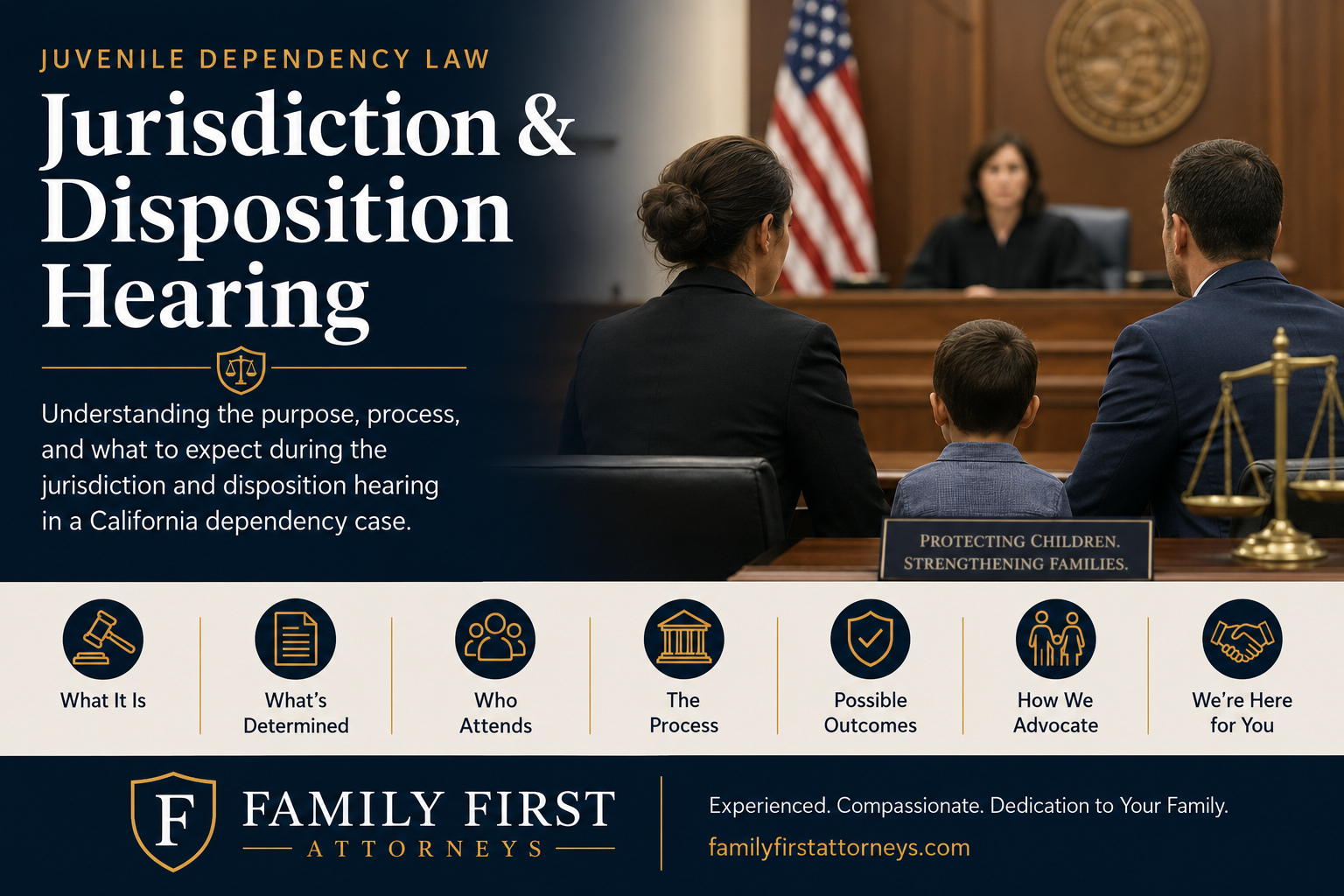
When DCFS or CPS becomes involved with your family, the legal process moves quickly. Two of the most critical stages in a California juvenile dependency case are the jurisdiction hearing and the disposition hearing. Understanding what happens at these hearings, what the court is looking for, and how to protect your rights is essential to keeping your family together. This guide will walk you through the jurisdiction and disposition hearings, explaining the process in clear, compassionate terms.
What is a Jurisdiction Hearing in California Juvenile Dependency?
The jurisdiction hearing is a pivotal moment in your dependency case. It is essentially a trial where the juvenile court judge determines whether the allegations made by the social worker in the dependency petition are true. The petition, typically filed under California Welfare and Institutions Code (WIC) Section 300, outlines the specific reasons why the agency believes your child is at risk of abuse or neglect and requires the court's protection.
During the jurisdiction hearing, the court is not deciding whether your child will be removed from your care permanently. Instead, the judge is deciding whether the court has the legal authority—or "jurisdiction"—to intervene in your family's life. If the judge finds that the allegations are true, your child becomes a dependent of the court. If the judge finds that the allegations are not true, the case is dismissed, and the agency's involvement with your family ends.
What Happens During the Jurisdiction Hearing?
At the jurisdiction hearing, you have several options for how to proceed. You can:
- Admit the Allegations: You can admit that the allegations in the petition are true. This means you agree that the court should take jurisdiction over your child.
- Submit on the Report: You can choose not to contest the allegations but also not explicitly admit them. Instead, you allow the judge to make a decision based solely on the social worker's report.
- Contest the Allegations: You have the right to a contested jurisdiction hearing, which is a formal trial. During a contested hearing, your attorney can present evidence, call witnesses, and cross-examine the social worker and any other witnesses presented by the agency.
It is crucial to consult with an experienced CPS defense attorney before making any decisions at the jurisdiction hearing. Admitting to allegations can have severe and long-lasting consequences for your family. A skilled attorney can help you evaluate the strength of the agency's case, identify weaknesses in their evidence, and determine the best strategy for protecting your rights.
What is the Burden of Proof at a Jurisdiction Hearing?
In a California juvenile dependency jurisdiction hearing, the agency must prove the allegations in the petition by a "preponderance of the evidence." This means they must show that it is more likely than not that the allegations are true. This is a lower standard of proof than "beyond a reasonable doubt," which is used in criminal cases. Because the standard is relatively low, it is essential to have a strong defense strategy in place.
What is a Disposition Hearing in CPS Cases?
If the judge determines at the jurisdiction hearing that the allegations are true and takes jurisdiction over your child, the case moves to the disposition phase. The disposition hearing is where the judge decides what will happen next. The primary focus of the disposition hearing is determining the safest and most appropriate placement for your child and establishing a plan for your family's future.
In many cases, the jurisdiction and disposition hearings are held on the same day. However, they can also be held separately, depending on the complexity of the case and the court's schedule.
What Decisions Are Made at the Disposition Hearing?
During the disposition hearing, the judge will make several critical decisions, including:
* Placement of the Child: The judge will decide whether your child can safely remain in your care or if they must be removed and placed in foster care, with a relative, or in another out-of-home placement. The court's primary concern is the safety and well-being of the child.
* Reunification Services: If your child is removed from your care, the judge will typically order a reunification plan. This plan outlines the specific services and programs you must complete to have your child returned to you. These services may include parenting classes, counseling, substance abuse treatment, or domestic violence programs.
* Visitation: If your child is placed out of the home, the judge will establish a visitation schedule. This schedule will dictate how often you can see your child, how long the visits will last, and whether the visits must be supervised.
How Can You Prepare for a Disposition Hearing?
The disposition hearing is your opportunity to demonstrate to the court that you are committed to providing a safe and stable home for your child. To prepare for this hearing, you should:
* Work Closely with Your Attorney: Your attorney will help you gather evidence, prepare witnesses, and develop a compelling argument for why your child should remain in your care or be returned to you as quickly as possible.
* Engage in Services Proactively: Do not wait for the court to order services before you start participating in them. If you know that substance abuse, mental health issues, or domestic violence are concerns, seek help immediately. Voluntarily engaging in services shows the court that you are taking the situation seriously and are committed to making positive changes.
* Maintain a Safe Environment: Ensure that your home is clean, safe, and appropriate for your child. Address any hazards or issues that the social worker may have identified.
* Stay Involved in Your Child's Life: If your child has been removed from your care, attend all scheduled visits and maintain regular contact with them. Show the court that you are a loving and involved parent.
The Importance of Legal Representation in Juvenile Dependency Cases
Navigating the California juvenile dependency court process without experienced legal representation is incredibly risky. The system is complex, the stakes are unimaginably high, and the agency has significant resources at its disposal. A skilled CPS defense attorney can level the playing field and protect your rights at every stage of the process.
At Family First Attorneys, led by Managing Attorney Mitchell Krems, we have extensive experience representing parents in juvenile dependency cases in Orange, California, and the surrounding areas. We understand the nuances of WIC Section 300 and the specific procedures of the local courts. We will aggressively advocate for your family, challenge the agency's evidence, and work tirelessly to keep your family together.
Frequently Asked Questions (FAQs)
1. What is the difference between a jurisdiction hearing and a disposition hearing?
The jurisdiction hearing determines whether the court has the legal authority to intervene in your family's life based on the allegations of abuse or neglect. The disposition hearing determines what actions the court will take, such as where the child will live and what services the parents must complete.
2. Can I lose my parental rights at a jurisdiction or disposition hearing?
No, you will not permanently lose your parental rights at a jurisdiction or disposition hearing. However, the decisions made at these hearings can set the stage for future proceedings that could lead to the termination of parental rights if you do not comply with the court's orders.
3. What happens if I disagree with the social worker's report?
If you disagree with the social worker's report, you have the right to contest the allegations at the jurisdiction hearing. Your attorney can present evidence and cross-examine witnesses to challenge the report's accuracy.
4. How long do I have to complete my reunification plan?
The timeline for completing a reunification plan varies depending on the child's age and the specific circumstances of the case. Generally, parents have 6 to 18 months to complete the required services and demonstrate that they can provide a safe home for their child.
5. Can my child be placed with a relative instead of foster care?
Yes, California law strongly prefers placing children with relatives or extended family members whenever possible. If your child must be removed from your care, you should provide the social worker with the names and contact information of any relatives who may be willing to care for them.
6. Do I really need a lawyer for a CPS case?
Yes. The juvenile dependency system is complex and adversarial. Having an experienced CPS defense attorney on your side is crucial to protecting your rights, understanding your options, and achieving the best possible outcome for your family.
Contact Family First Attorneys Today
If you are facing a CPS investigation or a juvenile dependency case in Orange, California, do not face it alone. The compassionate and experienced legal team at Family First Attorneys is here to help. We understand the fear and uncertainty you are experiencing, and we will fight tirelessly to protect your family. Contact us today to schedule a confidential consultation and learn how we can assist you during this challenging time.
Protect Your Family — Call Now
If CPS or DCFS is involved with your family, don't wait. Family First Attorneys provides 24/7 emergency consultations and aggressive defense for parents across Los Angeles, Orange, Riverside, and San Bernardino Counties.
Call (468) 777-7777 — Free ConsultationThis article is for informational purposes only and does not constitute legal advice. No attorney-client relationship is formed by reading this content. Every CPS and DCFS case is unique and the outcome depends on the specific facts and circumstances involved. Please consult a qualified California family law attorney regarding your specific situation.